
How to Build Bone Density During Midlife
When we think of fitness in our 40s and beyond, the focus is often on weight management, cardiovascular health, or maintaining flexibility. While these are important, there is a silent, structural crisis that affects millions of women during midlife: the rapid loss of bone density. The strength of your skeleton is the foundation of your long-term independence and vitality. Building and protecting your bone density now is one of the most critical investments you can make for a healthy, active future.
Osteopenia (low bone mass) and osteoporosis (brittle, fragile bones) are conditions that develop without symptoms over many years. Often, the first sign of osteoporosis is a devastating fracture from a minor fall. But bone loss is not an inevitable consequence of aging. By understanding the hormonal changes that accelerate bone breakdown and implementing targeted exercise and nutritional strategies, you can actively rebuild your skeletal strength.
The Estrogen Connection: Why Midlife is Critical for Bones
Your bones are not static structures; they are living, dynamic tissues that are constantly being broken down and rebuilt in a process called remodeling. During your younger years, the rate of new bone formation outpaces bone breakdown, allowing you to build peak bone mass by roughly age 30. After that, bone mass naturally begins to decline very gradually.
However, for women, this gradual decline accelerates dramatically during perimenopause and menopause. The reason lies in the critical role of estrogen. Estrogen acts as a protective shield for your bones. It slows down the activity of osteoclasts-the cells responsible for breaking down old bone tissue. When estrogen levels plummet during the menopausal transition, this protective mechanism is removed. The osteoclasts begin to break down bone tissue at a much faster rate than your body can rebuild it.
In fact, women can lose up to 20% of their total bone density in the five to seven years immediately following menopause. This rapid loss significantly increases the risk of fractures, particularly in the hips, spine, and wrists, which can severely impact mobility and overall quality of life. This is why intervention during perimenopause is absolutely essential; you must build the strongest foundation possible before the steepest decline occurs.
The Physics of Bone Building: Wolff’s Law
If hormones are working against you, how do you fight back? The answer lies in physics, specifically Wolff’s Law. This principle states that bone grows and remodels in response to the physical forces or mechanical stress placed upon it. Simply put: if you don’t use your bones, you lose them. But if you stress your bones appropriately, they respond by becoming denser and stronger.
Swimming and cycling are fantastic for cardiovascular health, but because the water supports your weight or you are seated, they do not provide the mechanical stress needed to stimulate bone growth. To build bone density, you must engage in two specific types of exercise: weight-bearing impact exercises and progressive resistance training.
1. Progressive Resistance Training
Resistance training, or strength training, involves moving your muscles against an opposing force, such as dumbbells, barbells, resistance bands, or your own body weight. When your muscles contract forcefully during lifting, they pull on the tendons attached to your bones. This pulling action creates micro-stress on the bone, signaling your body to deposit more minerals and reinforce the bone structure.
The key word here is progressive. Lifting the same light pink dumbbells for years will not continuously build bone. To force adaptation, you must gradually increase the weight or resistance over time. Focus on compound movements that recruit large muscle groups and stress the spine and hips, such as squats, deadlifts, lunges, and overhead presses. Aim for two to three strength training sessions per week.
2. Weight-Bearing Impact Exercises
Impact exercises require you to work against gravity while remaining upright. The impact of your feet hitting the ground sends a jolt through your skeletal system, which is a powerful stimulus for bone formation. High-impact activities like running, jumping rope, or plyometrics are excellent for bone health. However, if high impact is painful for your joints, low-impact weight-bearing exercises like brisk walking, hiking, or stair climbing are also beneficial, though slightly less potent.
Nutritional Foundations for Skeletal Strength
Exercise provides the stimulus for bone growth, but nutrition provides the building blocks. You cannot build a brick wall without bricks and mortar, and you cannot build bone without calcium, Vitamin D, and protein.
Calcium and Vitamin D: The Vital Partnership
Calcium is the primary mineral stored in your bones. Women over 50 need approximately 1,200 milligrams of calcium per day. While supplements can help, it is best to obtain calcium from dietary sources like dairy products, leafy green vegetables (kale, bok choy), almonds, and fortified plant milks, as dietary calcium is generally absorbed better and carries fewer risks.
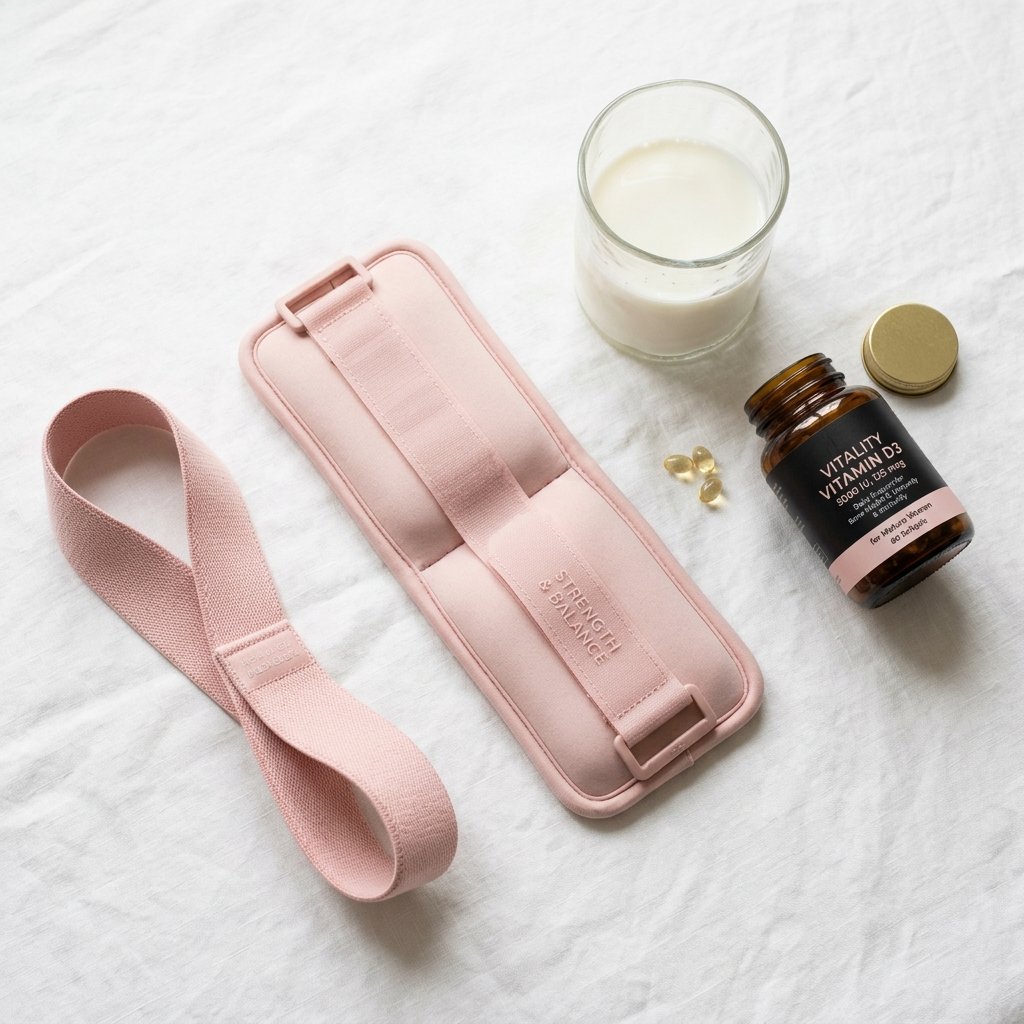
However, calcium cannot do its job without Vitamin D. Vitamin D is essential for the absorption of calcium in the gut. Without adequate Vitamin D, your body cannot utilize the calcium you consume, forcing it to pull calcium from your skeleton to maintain necessary blood levels. Because Vitamin D is difficult to obtain purely from food and sun exposure, especially in winter, supplementation is often necessary. Have your Vitamin D levels checked regularly.
The Importance of Protein
Bones are not just made of minerals; they are built on a scaffolding of collagen protein. Adequate protein intake is vital for maintaining this structural matrix and supporting the muscle mass needed to pull on the bones during exercise. Aim for a balanced intake of high-quality protein with every meal.
Medical Monitoring and Support
As you navigate your 40s and 50s, it is crucial to establish a baseline for your bone health. Request a DEXA (dual-energy x-ray absorptiometry) scan from your healthcare provider. This simple, painless test measures your bone mineral density and helps identify osteopenia or osteoporosis early.
If your bone density is already low, lifestyle changes alone may not be enough. Your doctor may discuss medications designed to slow bone loss or stimulate new bone formation. Additionally, Hormone Replacement Therapy (HRT) is highly effective at preventing menopausal bone loss by replacing the estrogen your body is no longer producing.
Building bone density during midlife requires a proactive, multi-faceted approach. By combining challenging resistance training, impact exercises, targeted nutrition, and medical monitoring, you can fortify your skeleton. Strong bones are the ultimate foundation for a vibrant, independent, and resilient second youth.
Frequently Asked Questions
Is it too late to build bone density in my 50s?
It is never too late to improve your bone health. While it is true that building significant new bone mass becomes much harder after menopause, progressive resistance training and proper nutrition can effectively halt further bone loss, improve bone quality, and build the surrounding muscle to prevent falls. If you are diagnosed with osteoporosis, specific medications can actively rebuild bone density.
I walk three miles a day. Is that enough for my bones?
Walking is excellent for your cardiovascular health and mental wellbeing, and it is a low-impact weight-bearing exercise. However, the body quickly adapts to the steady, repetitive impact of walking. To significantly stimulate new bone growth, you must introduce new, challenging mechanical stress, which requires lifting heavy weights (resistance training) or incorporating higher-impact movements like jumping or jogging.
Should I take a calcium supplement?
It is generally recommended to get as much of your daily calcium requirement (1,000 to 1,200 mg) from food sources as possible. Excessive calcium from supplements has been linked in some studies to an increased risk of kidney stones and cardiovascular issues. Track your dietary intake, and only supplement the shortfall. Always discuss supplementation with your doctor.
How does weight lifting prevent falls?
Resistance training doesn’t just build bone; it builds muscle mass (preventing sarcopenia) and improves neuromuscular coordination. Stronger leg and core muscles improve your balance, stability, and reaction times. If you do trip, having the muscular strength to catch yourself is the number one way to prevent the devastating fractures associated with osteoporosis.
References
- Watson, S. L., et al. (2018). High-Intensity Resistance and Impact Training Improves Bone Mineral Density and Physical Function in Postmenopausal Women With Osteopenia and Osteoporosis: The LIFTMOR Randomized Controlled Trial. Journal of Bone and Mineral Research, 33(2), 211-220.
- Ji, M. X., & Yu, Q. (2015). Primary osteoporosis in postmenopausal women. Chronic diseases and translational medicine, 1(1), 9-13.
- Weaver, C. M., et al. (2016). Calcium plus vitamin D supplementation and risk of fractures: an updated meta-analysis from the National Osteoporosis Foundation. Osteoporosis International, 27(1), 367-376.